

Biogas: free gas from pig and cow dung
Feed a sealed tank with manure and food scraps. Bacteria turn it into cooking gas, and what overflows is liquid fertiliser for your garden. Aotearoa’s warm weather is perfect for it.
How it works
- Feed in: mix fresh dung with water about 1 to 1 (pig manure is wetter, so add less water). Aim for runny porridge, not soup.
- Digest: in a sealed tank with no air, bacteria break it down over about 30 days. They like it warm (25–37 °C), so Aotearoa’s weather is ideal. Paint the tank dark and keep it in the sun.
- Gas collects at the top: about 55–65% methane (it burns), the rest mostly CO₂, and a little smelly H₂S.
- Liquid fertiliser overflows out the side each time you feed it.
- Clean and store: a water trap, a steel-wool scrubber to remove H₂S, then a gas bag, inner tube or floating drum.
- Use it: a converted gas cooker, an outdoor hot-water heater, or even a generator.
🐄 Start it with cow dung: it’s the best starter. A cow’s stomach is full of the bacteria that make biogas, so fresh cow dung gets a new digester going fastest and keeps it steady. Fill the first load with cow dung mixed 1 to 1 with water, then add pig manure and food scraps once it is making gas.
Starting up takes 2 to 6 weeks. No cow nearby? Ask a farmer for a few buckets of fresh cow dung, or a bucket of slurry from a digester that already works. The first gas is mostly CO₂: let it out outdoors until a flame burns steady and blue.
📷 What it looks like
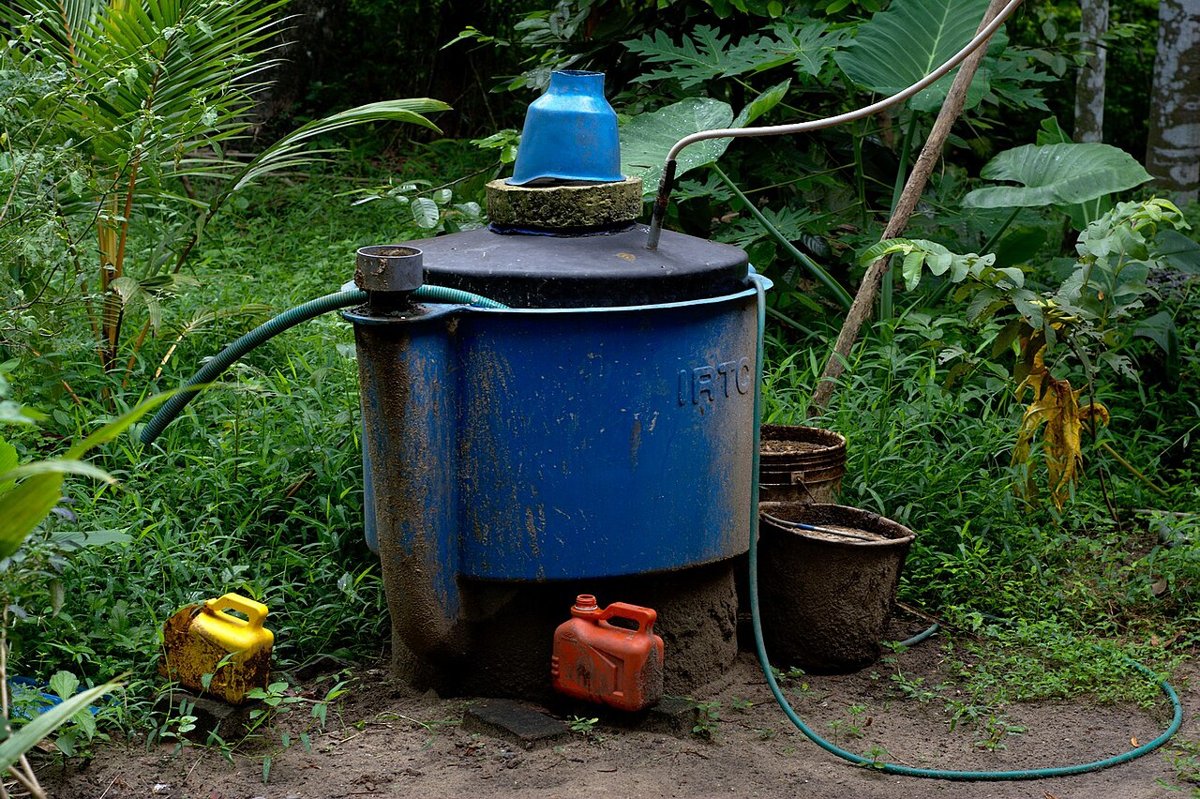
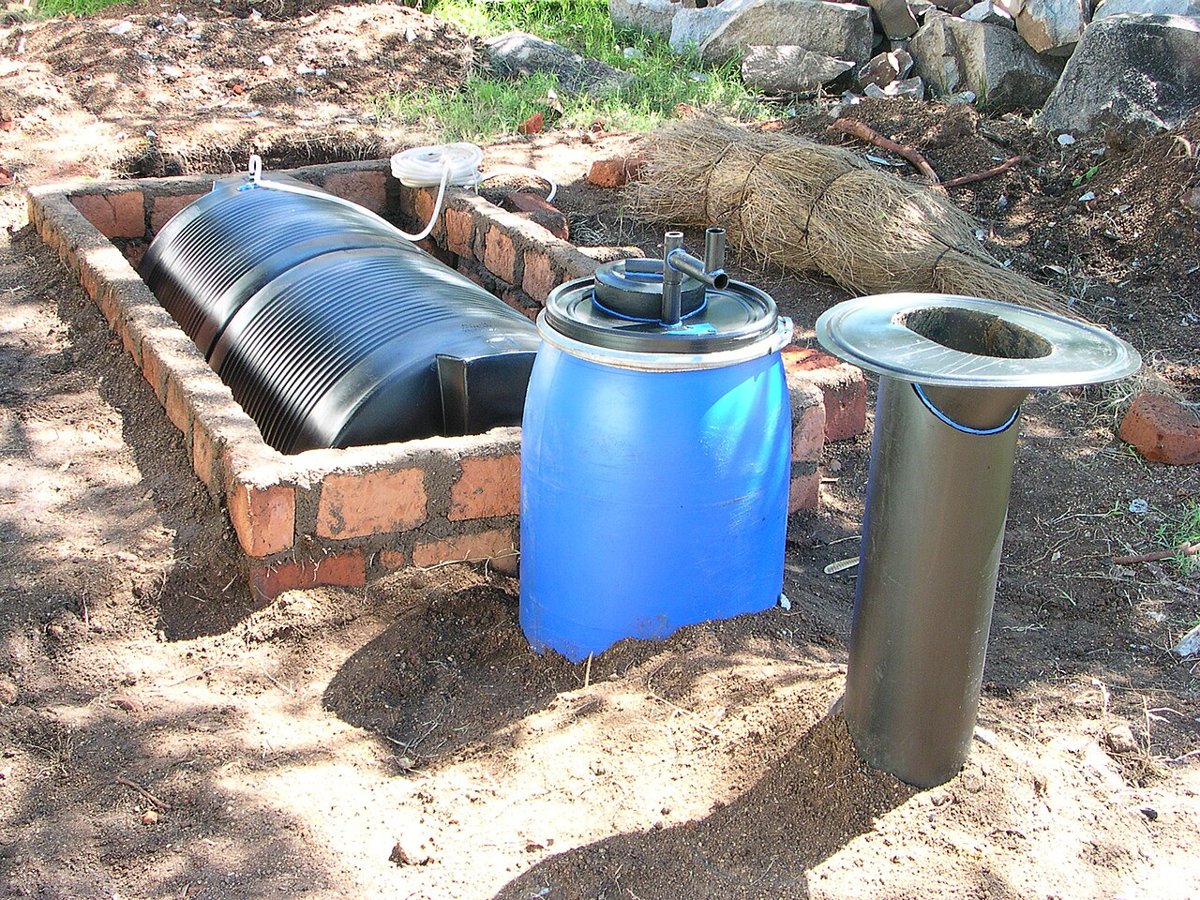
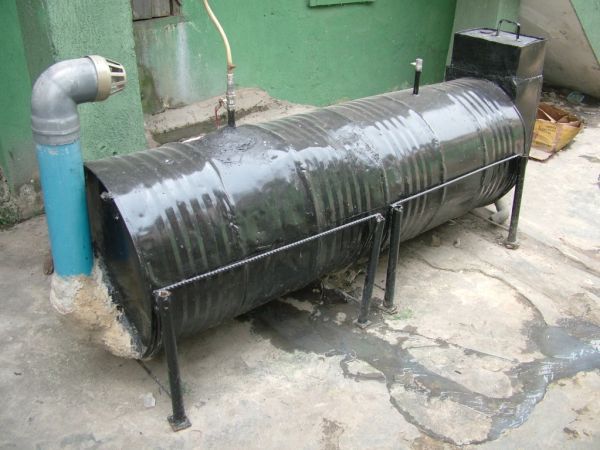
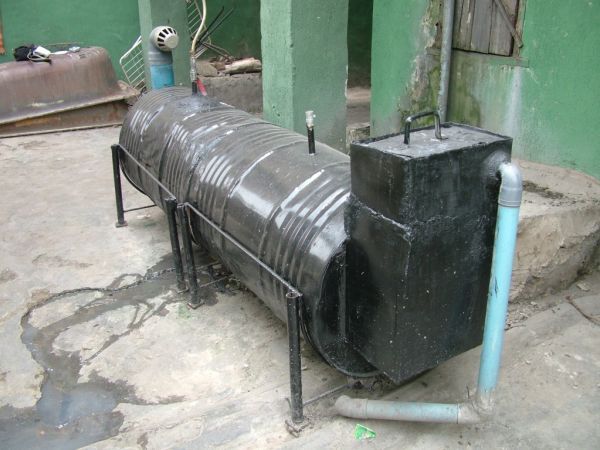
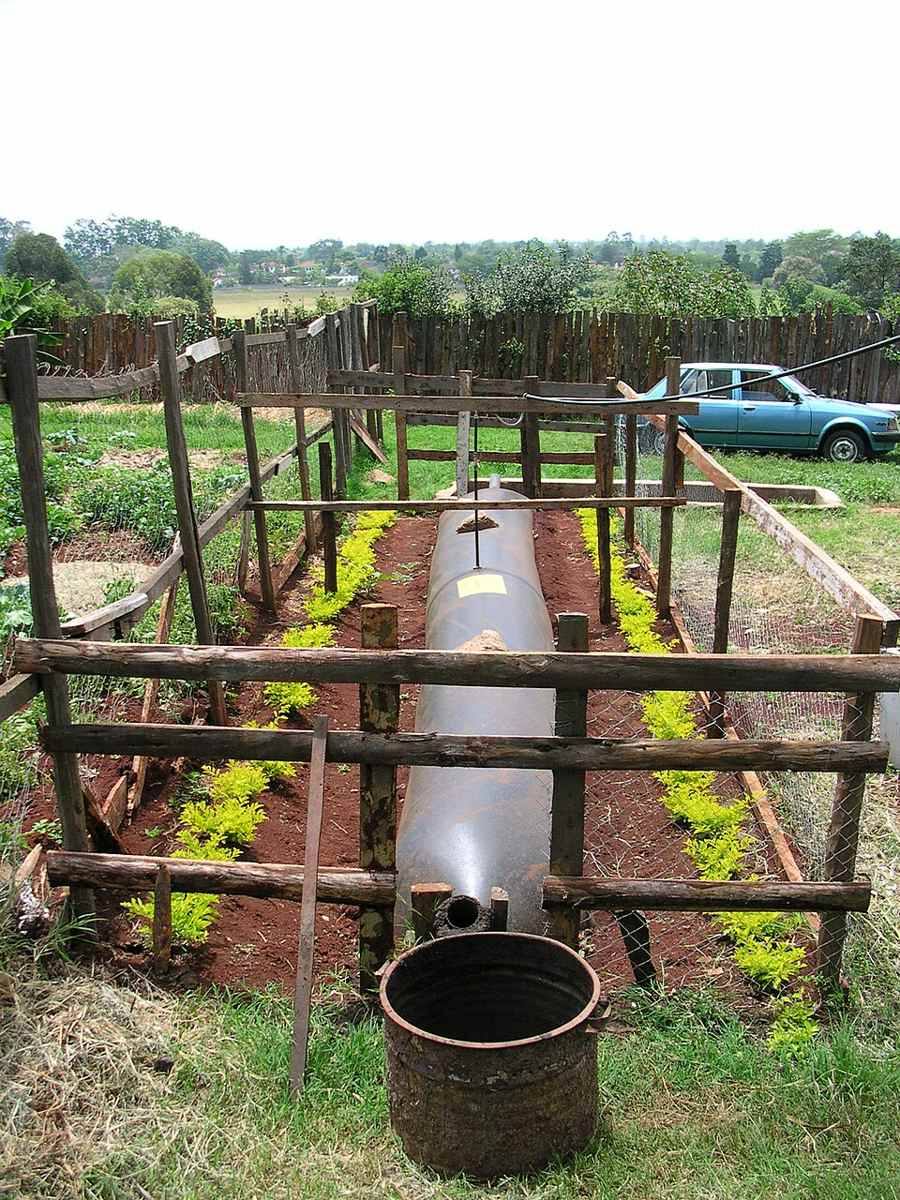
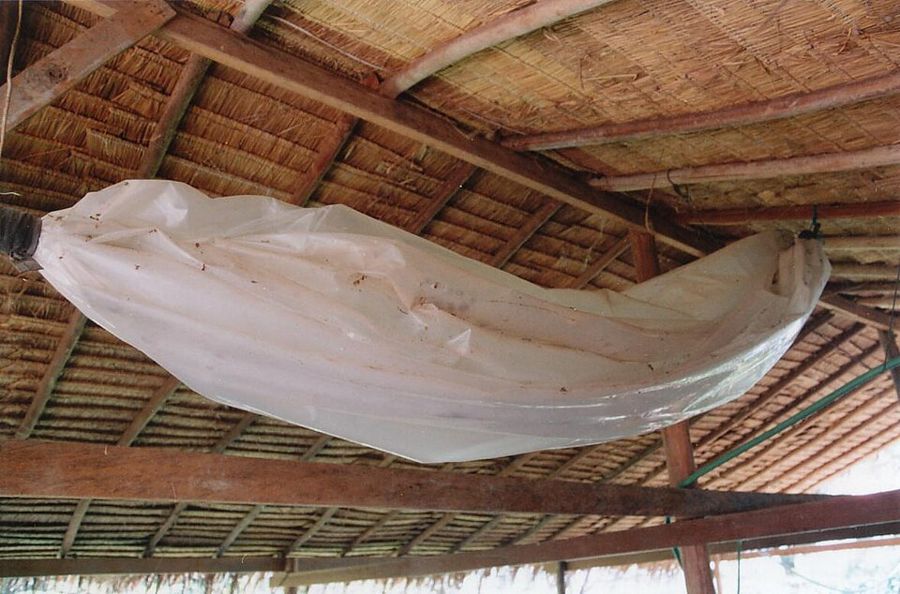
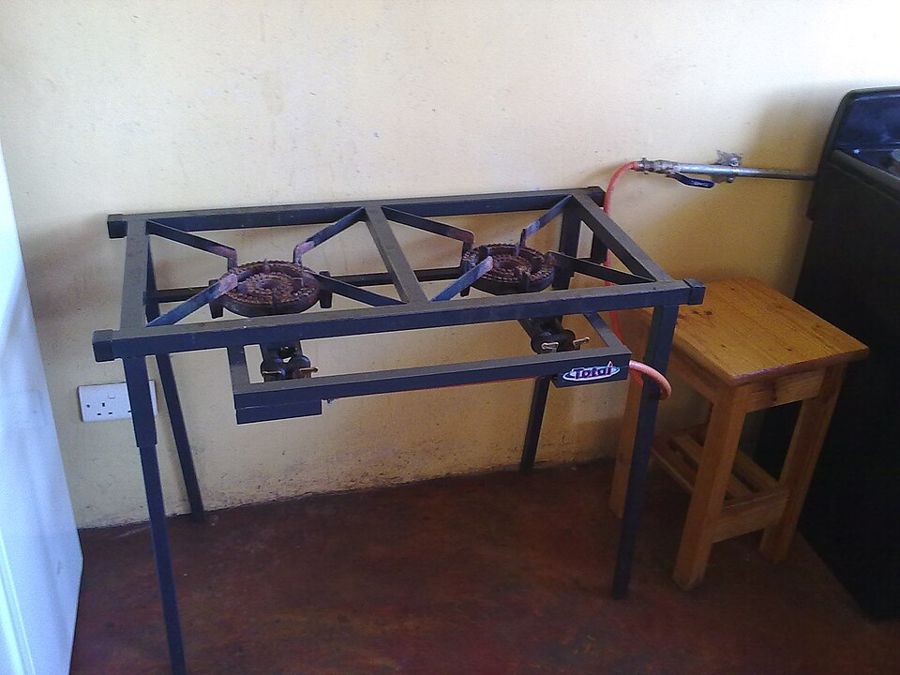
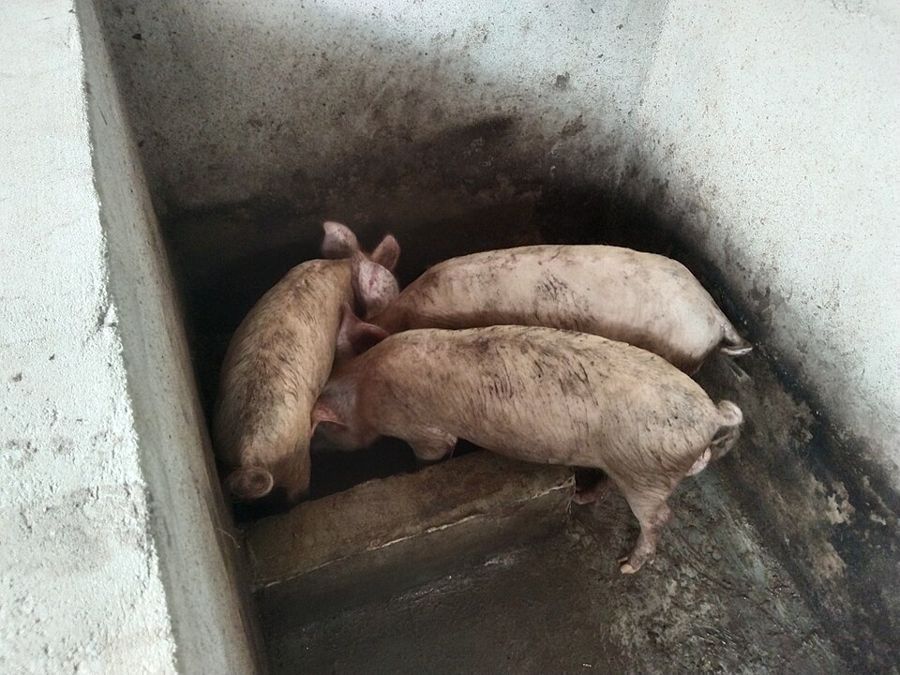
Real photos to give you an idea. Your gear may look different. Watch the videos below to see it working.
Which digester? Four ways to build one
| Type | Feed each day | Gas each day | Good for | Rough cost |
|---|---|---|---|---|
| 200 L blue barrel | about 5 L of mix (2–3 kg dung) | 60–180 L | Learning, a kettle or one pot a day (20–40 min of flame) | US$80–200 |
| Two barrels, floating drum | about 5 L | same, but steady pressure | Small kitchen, about 1 hour cooking | US$120–300 |
| 1,000 L IBC tank | about 25 L (10–15 kg pig manure + scraps) | 300–900 L | Part of a family’s cooking, 1–2 hours of flame | US$200–500 |
| Bag / tube or brick dome (2–6 m³) | 50 kg dung + 50 L water | 1.5–3 m³ | All the cooking for a family of 4–6, with a piggery | US$150–400 (bag) to a few thousand (brick) |
Costs are overseas prices for materials; in Aotearoa add freight. Used IBCs and drums must be washed well and never have held poisons.
Blue barrel build (what you need)
- A 200 L plastic drum with a clamp-ring lid
- Inlet: 75–100 mm PVC pipe that goes almost to the bottom (cut at 45°)
- Outlet: 50 mm PVC at about two-thirds height, on the opposite side
- Uniseals or tank fittings, silicone or MS sealant
- Gas outlet at the top with a ball valve, hose, water trap and steel-wool scrubber
- Fill only to about 75%: the top quarter is for the gas
IBC tank build (the popular one)
- A used 1,000 L IBC, kept in its steel cage
- Three 50 mm pipes through the lid with Uniseals: feed (down to the floor), gas (just under the lid), slurry out (mid-height, far corner)
- A gas holder: inner tubes, a gas bag, or a second tank floating in water
- A water bubbler for pressure relief (gas bubbles out if pressure goes over ~10 cm of water)
- Black paint or insulation on the sunny side for warmth
🛢️ Backyard builds: IBC tank and blue drum
Keep it simple. All you really need is a sealed tank, a feed pipe on an angle so the scraps slide in, an overflow for the slurry, and a gas pipe with a tap going to a gas bag and the stove.
1,000 L IBC tank
- A used 1,000 L IBC in its steel cage. Wash it well; it must never have held poison or chemicals. Keep the bottom tap shut.
- Feed pipe (100 mm PVC) through the top on an angle, reaching 10–15 cm above the floor, with the bottom end cut on a slant. Food scraps and cow dung slide straight down into the bottom.
- Overflow pipe (50 mm) out of the side at about two-thirds full. As you feed, the old slurry pours out into a bucket: that is your liquid fertiliser.
- Seal the lid and every hole (tank fittings or Uniseals plus silicone). A gas pipe with a tap comes out of the top.
- Hose to a gas bag (or a couple of old inner tubes) to hold the gas.
- A biogas stove. Open the tap and cook.
200 L blue drum
- A 200 L plastic drum with a clamp-ring lid, washed well.
- Feed pipe (75–100 mm PVC) through the lid on an angle, cut on a slant, ending near the bottom.
- Overflow pipe (50 mm) out of the side at about two-thirds height, opposite the feed pipe.
- Gas pipe with a tap in the lid. Seal the lid and every hole.
- Hose to a gas bag or inner tube.
- A biogas stove: a drum gives about 60–100 L of gas a day, enough for a kettle or a short cook.
Start it with cow dung mixed 1 to 1 with water, then feed scraps and manure every day. Usable gas comes after about 2–8 weeks. Fill only to the overflow: the space on top is where the gas collects. Aotearoa is ideal: the bacteria love warmth (best at about 30–40 °C), so the heat all year round keeps the gas coming without any insulation.
Optional extras, not needed to start: a water trap at the lowest point if your hose is long (water collects in it), a steel-wool H₂S filter if you run an engine or want the stove to last longer, and black paint or insulation on the tank when it is cold. IBC guide: about 300–500 L of gas a day from 25 L of feed.
How many pigs or cows do I need?
- 1 cow gives about 10 kg of dung a day = 0.3–0.5 m³ of gas
- 1 pig (about 50 kg) gives 2–2.5 kg a day = 0.12–0.18 m³ of gas
- 1 kg of food scraps = 50–160 L of gas
1 m³ of biogas ≈ 0.42 kg of LPG.
What to put in, and what to keep out
✅ Good
Fresh pig manure, cow dung, a little chicken manure, kitchen leftovers, overripe fruit, chopped taro and cassava peel, vegetable scraps. Pig manure is rich in nitrogen: mix in food scraps or cut grass to balance it. Feed a little every day; a big dump of food scraps turns it sour.
❌ Keep out
Plastic, glass, metal, sand and stones, nappies, bleach and soap, engine oil, lots of citrus, coconut husk and woody stems, and manure from animals on antibiotics. If the flame goes yellow and gas drops, the tank has turned sour: stop feeding for a few days and add a little wood ash or crushed coral lime.
🎈 Storing the gas
Biogas is stored at low pressure, about the same as blowing gently into a straw (5–15 cm of water). Pick one of these:
| Store | How it works | Good and bad |
|---|---|---|
| Gas storage bag (PVC or rubber) | A big soft bag fills up like a pillow. Sold in sizes from about 0.5 to 4 m³: search “biogas storage bag” on eBay, AliExpress or Amazon. | Cheap and easy. Pressure drops as it empties; keep it in shade, away from sharp things, pigs and dogs. Only add weight if the bag maker says how much. |
| Floating drum | An upside-down drum sits in water and rises as gas comes in. Its weight gives steady pressure. | Best steady flame. Needs a second, bigger drum or tank full of water. |
| Fixed dome or the digester itself | The gas collects in the top of a brick dome or a bag digester. | Nothing extra to buy, but the pressure changes a lot through the day. |
| Pool floats or air mattresses | Inflatable pool toys or mattresses with a hose fitted to the valve. | Cheap and easy to find for a first test. The plastic is thin, so they leak at the seams and perish in the sun much faster than a real gas bag. Check with soapy water. |
| Truck tyre inner tubes | Old inner tubes joined to the gas pipe. | Almost free for a first test. Small, and they perish in the sun. |
Anything gas-tight works at low pressure: a bought gas bag, a floating drum, inner tubes or a sealed inflatable. What matters is that it seals: test every joint and seam with soapy water, and keep it in the shade, away from sharp things, fire and animals.
Don’t pump biogas into LPG bottles with an air compressor, even if you have seen it done. Raw biogas is wet and carries H₂S, which makes acid that eats steel bottles from inside; methane only fits in a useful amount at very high pressure that LPG bottles are not built for; and a normal air compressor is not sealed for flammable gas, so it can ignite. In Australia only approved stations may fill gas bottles. Store it at low pressure and use it within a day or two.
🔥 Burners and nozzles (jets)
Biogas is about 60% methane and comes at low pressure, so it carries less heat per litre than LPG. A burner made for LPG needs more gas through a bigger jet and a different air mix, or the flame lifts off and goes out.
| Appliance | What to do |
|---|---|
| Biogas stove | The easiest: made for low pressure, with big jets. Many cost US$20–60 online. Connect straight to the gas line, no regulator. |
| LPG cooker or BBQ burner | Take off the LPG regulator (biogas pressure is already low). Widen the jet a little at a time (roughly 1.4–1.8 mm for a cooking ring) and close the air shutter partly until the flame is blue and steady. Label it: never put it back on LPG. |
| Hot water for a shower | Use a heater sold for biogas (some work from 1–5 mbar, about 6 L of warm water a minute) or a low-pressure model with matching jets. Outdoors or with a flue only: never unflued in a closed bathroom. |
| Biogas lamp | Mantle lamps made for biogas give light at night, but use gas fast. |
- Steady pressure makes every burner work better: a floating drum, or a gas bag with a gentle, even weight.
- Yellow, smoky flame: too little air, open the shutter. Flame lifting off and going out: too much air or too big a jet.
- Fit a flame arrestor or one-way valve before each appliance, and test every joint with soapy water.
- Safety devices on LPG heaters (flame-failure valves) may not work at biogas pressure: check the maker’s rating before you trust them.
Using the gas
🍳 Cooking
Use a biogas stove, or an LPG burner converted with a bigger jet (see Burners and nozzles above). Keep it separate: a converted burner must never go back on an LPG bottle.
⚡ Generator
A petrol generator runs on biogas with a mixer between the air filter and the carburettor: start on petrol, warm up, open the biogas, close the petrol. Expect about half to three-quarters of its petrol power, using about 0.7–0.9 m³ of gas per kWh. So 1 m³ of gas a day makes about 1–2 kWh: lights and phones, not a freezer farm. Scrub out the H₂S first or it eats the engine; change the oil often.
Wiring a generator into your solar system →
🚗 Old car engine
A petrol car engine can run on biogas with a gas mixer on the intake, belted to an alternator and an inverter. It can make a few kW, but it uses gas fast (a 1.6 L engine could empty a family digester in an hour). Best for someone with a big piggery and workshop skills. Diesel engines need some diesel too (about 20%).
🌱 Liquid fertiliser (bioslurry)
What overflows is a rich liquid fertiliser: the nitrogen is in a form plants take up quickly. Farmers report 10–30% better harvests than with plain manure, more on vegetables.
- Let it sit in a bucket for a few days to a week. It should smell earthy, not sharp.
- Water it down: 1 part slurry to 1–2 parts water for the soil; 1–3 cups in a 10–15 L watering can for weekly feeding. Too strong burns roots.
- Pour it on the soil, not on the leaves or fruit, and cover with soil or mulch.
- Vegetables: about 250–500 ml per plant every 2–3 weeks. Taro and yams love it; cassava also wants potassium, so add wood ash.
- Not on salad leaves you eat raw. Wash your hands. Keep it away from wells and the lagoon.
⚠️ Safety
- Biogas burns and can explode when 5–15% of it is mixed with air. Keep the digester and gas bag outdoors, never inside a house, kitchen or bathroom.
- H₂S (the rotten-egg smell) is poisonous. At high levels you can’t even smell it. Never put your head in the tank or climb into a pit.
- No smoking, open fires or grinders near the tank, bag or pipes.
- Keep children, dogs and pigs away from the gas bag and floating drum.
- Every sealed tank needs pressure relief. Fit a water trap and a one-way valve before the stove.
- Check every joint with soapy water after building and after every cyclone. Bubbles mean a leak.
- If someone feels dizzy near the plant, get them into fresh air. Don’t go into a pit to rescue them.
🎥 Build one
🎥 Using the gas and the fertiliser
🎥 Around the Pacific
Videos belong to their makers on YouTube. They only load when you tap them.