

Fire safety: what to do if there is a fire
Getting out of a house fire, kitchen fires, which fire extinguisher to use, and how to stop fires starting.
The most important rule
Get out, stay out, and call for help. People matter more than things. Only try to put out a fire if it is very small, you have the right equipment, and you have a clear way out behind you.
Emergency numbers
| Aotearoa | Fire and emergency 111 · Police 111 |
| Australia | 000 |
| New Zealand | 111 |
| Also useful | Mental health and wellbeing (call or text) 1737 |
111 reaches Fire and Emergency New Zealand. Get everyone out, stay out, and call from outside, once you are safe.
If your house is on fire: get out
- Shout “FIRE! FIRE! FIRE!” to wake and warn everyone. Help children and older people.
- Get out straight away by the nearest safe way. Don’t stop to grab things, and don’t go looking for pets or belongings.
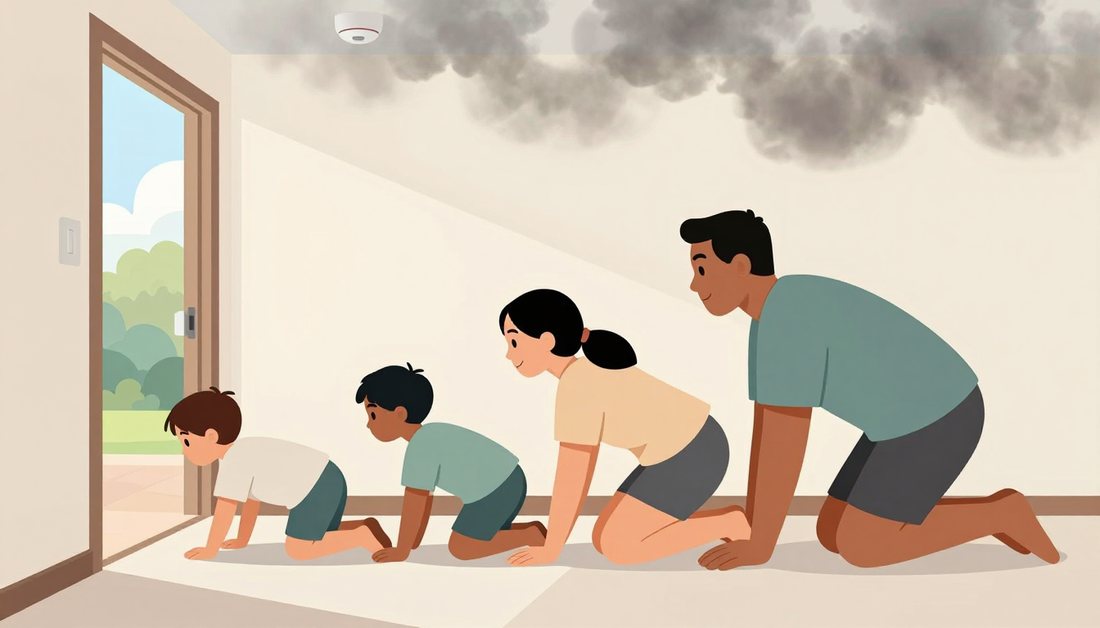
- Get down low. Smoke and hot gas rise. Crawl on your hands and knees where the air is cleaner. Smoke can knock you out in a few breaths.
- Feel closed doors with the back of your hand before you open them. If the door or handle is hot, don’t open it: use another way out.
- Close doors behind you as you go. A closed door slows the fire and the smoke and gives everyone more time. If you can’t put a fire out, close the door on it.
- Go to your meeting place outside (the letterbox, front gate or a neighbour’s), and check everyone is there.
- Call the emergency number from outside, on a mobile or from a neighbour’s phone.
- Never go back inside a burning house for any reason. Tell the firefighters if anyone is missing.
If you are trapped
- Call the emergency number and stay on the line. Tell them exactly where you are.
- Close the door to the room and block the gap under it with towels, sheets or clothes to keep smoke out.
- Stay low. Go to a window, open it if there is no smoke outside, and wave or shout so people know where you are.
At bedtime
Close the doors to the kitchen and living areas, and bedroom doors, before you go to sleep. A closed door can hold back a fire long enough for you to get out. Keep your keys in deadlocked doors when you are home, and a phone and torch by the bed.
If clothes catch fire: stop, drop, cover and roll
- Stop. Don’t run: running fans the flames.
- Drop to the ground.
- Cover your face with your hands.
- Roll backwards and forwards until the flames are out.
- Someone else can smother the flames with a fire blanket or a heavy woollen blanket.
- Then cool the burn under cool running water for 20 minutes and call for help (see Burns below).
Cooking and oil fires
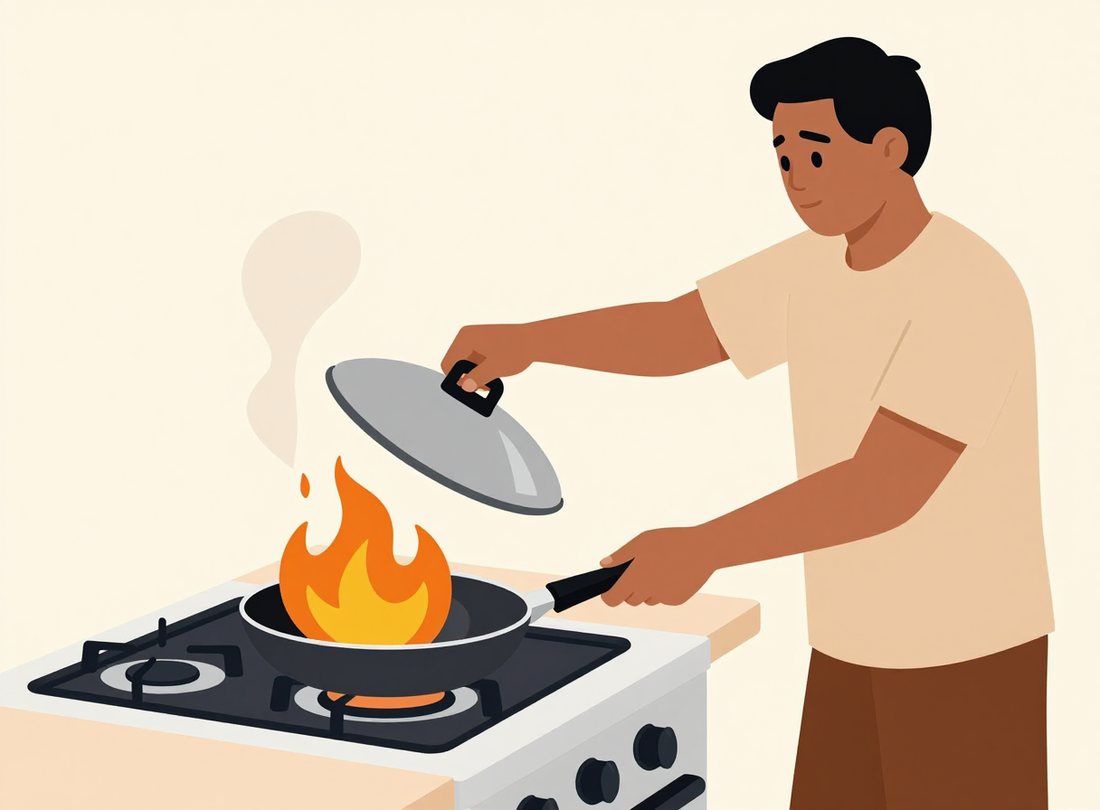
NEVER put water on a burning pan of oil or fat. The water turns to steam instantly and throws burning oil everywhere: a huge fireball. Never carry or move a burning pan either.
- Turn off the heat (stove or gas) if you can do it safely.
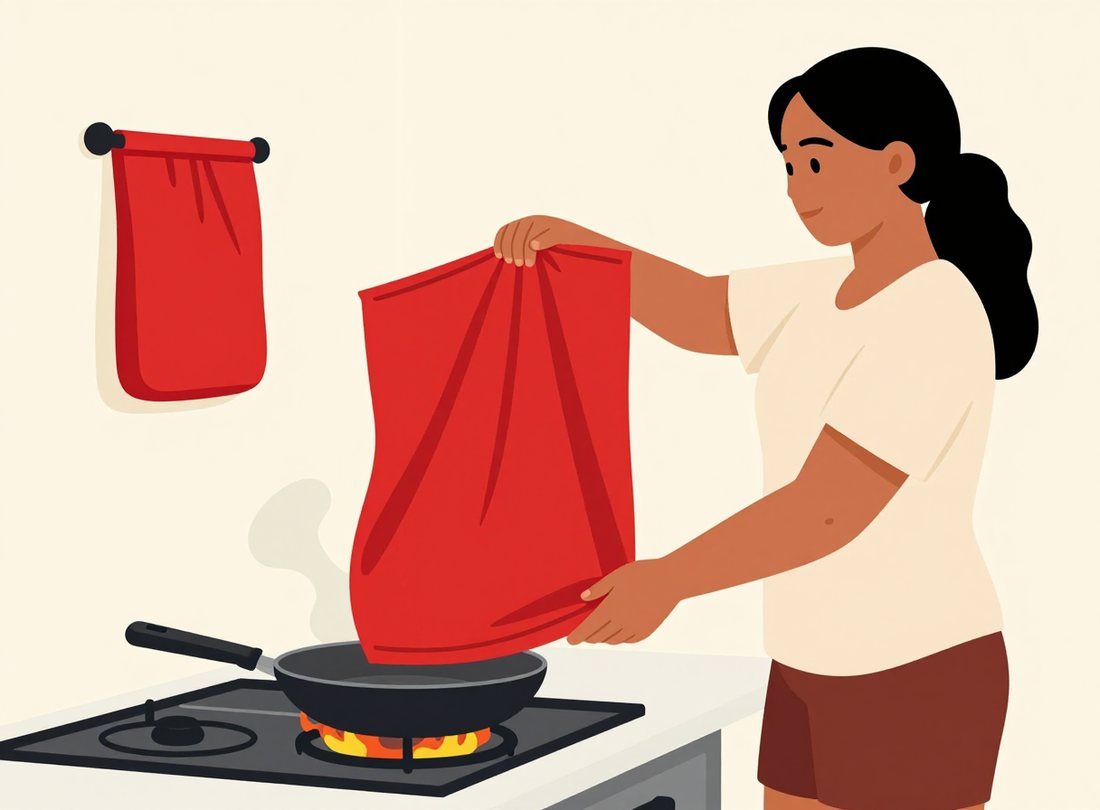
- Smother the flames: slide a metal lid or a solid chopping board over the pan, or use a fire blanket. Protect your hands.
- Leave it covered. Don’t lift it to look. Leave the pan where it is until it has cooled right down (up to an hour).
- If the fire is bigger than the pan, or you are not confident: get everyone out, close the kitchen door, and call the emergency number.
- Call the fire service even if you put it out: fire can spread unseen into the range hood and roof.
- Oven fire: turn the oven off and keep the door closed.
- Wet towel? Australian fire services say use a lid, a chopping board or a fire blanket. New Zealand’s fire service also allows a damp (wrung-out, not dripping) tea towel if you have nothing else. A dry tea towel will just catch fire.
- Never leave cooking unattended, keep tea towels and paper away from the stove, and wear close-fitting sleeves.
Types (classes) of fire
| A | Ordinary things that burn: wood, paper, cloth, rubber, plastics |
| B | Flammable liquids: petrol, diesel, kerosene, paint, solvents |
| C | Flammable gases: LPG gas bottles, natural gas |
| D | Burning metals (rare at home): needs a special extinguisher |
| E | Electrical equipment that is still plugged in or switched on |
| F | Cooking oils and fats |
Fire extinguishers: which one for which fire
In Australia every extinguisher is red, with a coloured band that tells you what is inside. Always read the label too: it shows the classes of fire it can be used on. No one extinguisher works on every fire.
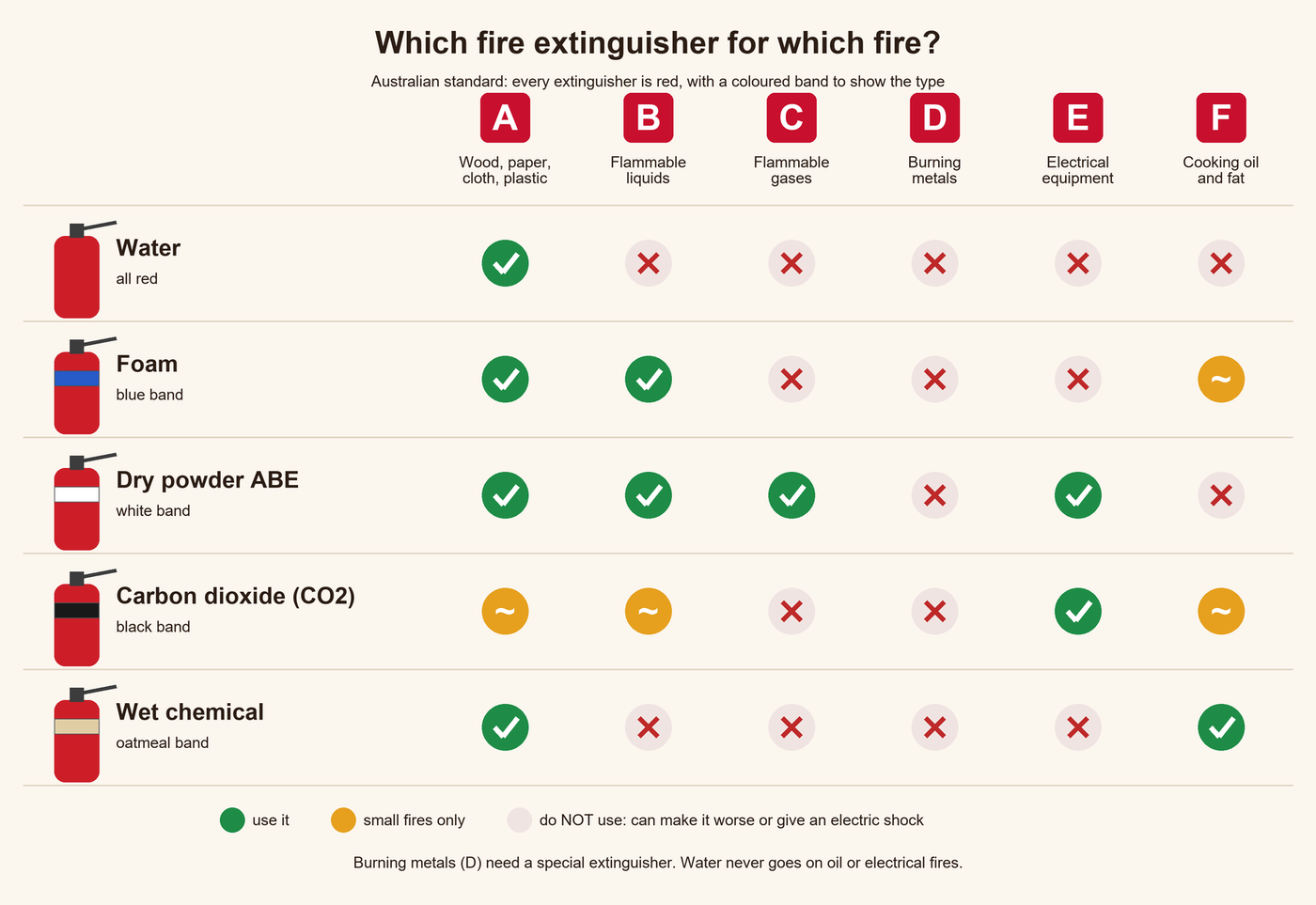
- Water (all red): wood, paper and cloth only. Never on electrical or oil fires.
- Foam (blue band): wood, paper and flammable liquids. Never on electrical fires.
- Dry powder (white band, ABE or BE): the best all-rounder for homes and cars. ABE works on A, B, C and E fires. BE works on B, C and E. Not good on cooking oil.
- Carbon dioxide, CO2 (black band): best for electrical fires. Short range, so you must be close, and it can blow light material around.
- Wet chemical (oatmeal band): made for cooking oil and fat fires (class F). Never on electrical fires.
- Older extinguishers (before 1999) may be different colours, and halon/BCF ones are banned. If yours is old, replace it.
What to keep at home
- Australian fire services suggest a 1 kg dry powder extinguisher (ABE or BE) and a fire blanket in the kitchen. New Zealand’s fire service suggests a wet chemical extinguisher for kitchens.
- Keep them near the way out of the kitchen, not right beside the stove, so you can grab them on the way to the fire and still escape.
- A dry powder extinguisher in the car or boat is a good idea too.
- Once an extinguisher has been used, even a little, get it refilled or replaced. Replace or service it at about 10 years.
How to use a fire extinguisher: P.A.S.S.
- Pull the pin (it breaks the plastic seal). Don’t squeeze the handle while you pull it.
- Aim the nozzle or hose at the base of the fire, not at the flames.
- Squeeze the handle.
- Sweep from side to side across the base of the fire until it is out.
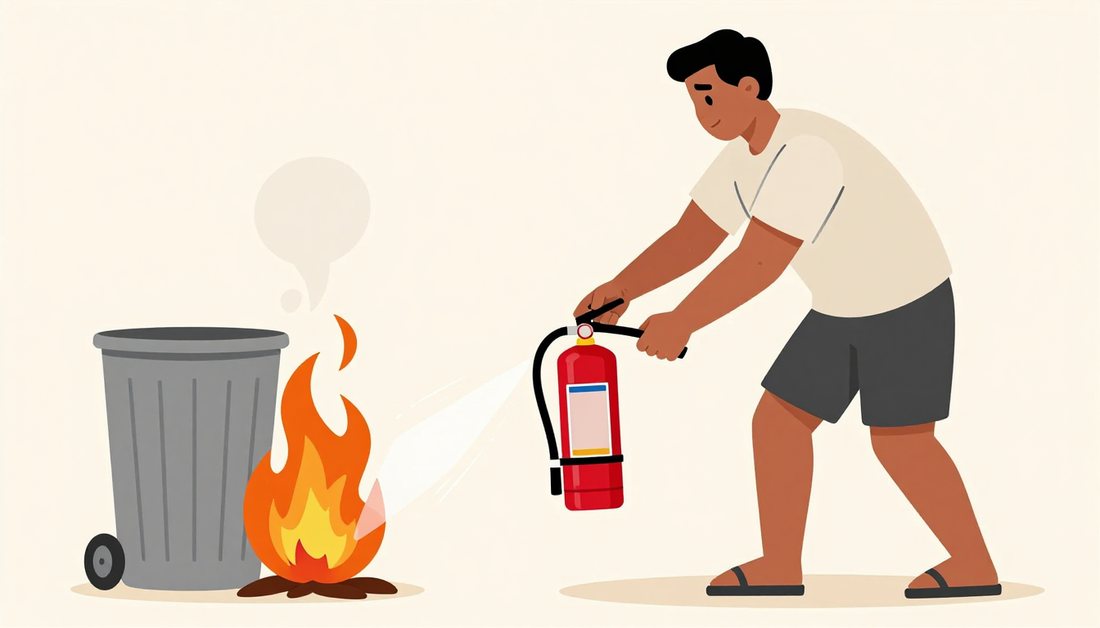
- Give it a quick test squirt first so you know how far it reaches. Then approach with the wind behind you.
- Keep your way out behind you. Walk, never run. When it is out, back away facing the fire in case it flares up again.
- A small extinguisher only lasts about 8 to 15 seconds, so don’t waste it.
Do NOT try to fight the fire if
- It is bigger than a rubbish bin (waste paper basket), or spreading fast.
- You can’t put it out in about 30 seconds, or the extinguisher isn’t working.
- You don’t know what is burning, or you don’t have the right extinguisher.
- Anyone’s life is at risk, or the smoke is getting thick.
- Then close the door on it, get everyone out, and call the emergency number from outside.
How to use a fire blanket
- Pull both tabs down sharply to get the blanket out of its pouch.
- Keep holding the tabs and wrap the top edge over your hands to protect them.
- Hold it up in front of you like a shield and walk slowly towards the fire.
- Lay it over the pan so it covers it completely on all sides. Don’t throw it.
- Let go, step back, and turn off the stove.
- Don’t lift it to look. Leave it in place for at least an hour, until everything is cold. Call the emergency number.
A fire blanket can also be wrapped around a person whose clothes are on fire. Hang it near the kitchen door, not right beside or above the stove. A used blanket must be replaced.
Electrical fires
- Turn the appliance off at the power point, or pull the plug out, but only if you can do it safely.
- Never use water on an electrical fire: you could be electrocuted. Use a dry powder (ABE or BE) or a CO2 extinguisher.
- If it doesn’t go out on the first try, get out and call the emergency number.
- Prevention: don’t overload power boards, plug heaters straight into the wall, don’t charge phones on beds or couches, and throw away damaged cords and chargers.
Smoke alarms
- Working smoke alarms save lives. Most people who die in house fires had no working alarm.
- Use photoelectric smoke alarms. Put them in every bedroom, in hallways outside bedrooms, in living areas, and on every level of the house.
- Don’t put smoke alarms in the kitchen, bathroom or laundry (steam and cooking set them off). Heat alarms can go there.
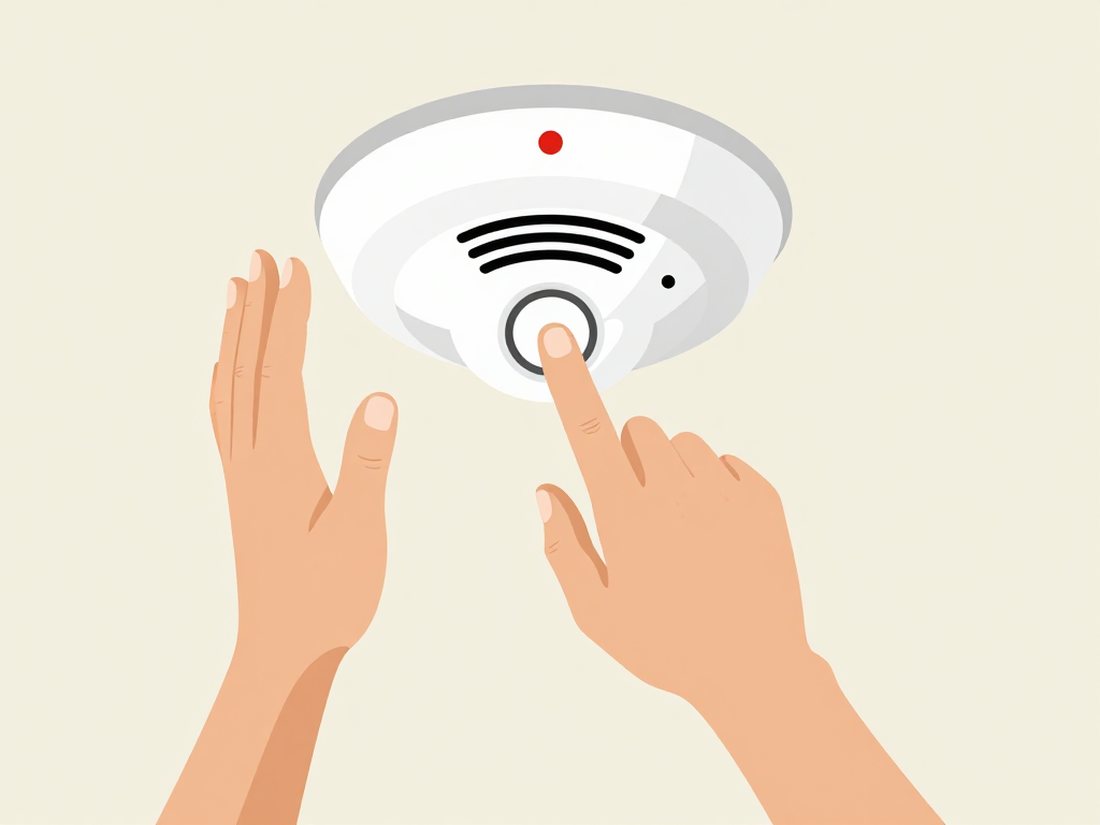
- Test them every month by pressing the button (a broom handle helps). Replace 9-volt batteries every year.
- Replace every smoke alarm after 10 years. The date is on the back.
- Queensland: by 1 January 2027 every home must have interconnected photoelectric smoke alarms in every bedroom, hallway and level (already required when a house is sold or leased).
Make a family escape plan
- Draw a simple map of your home. Mark two ways out of every room (doors and windows).
- Pick a meeting place outside: the letterbox, the front gate or a neighbour’s house.
- Make sure everyone knows the emergency number, and who will help the little children and older people.
- Keep exits clear, and keep keys in deadlocks when you are home so you can get out fast.
- Practise it with the whole family, including crawling low and feeling doors. Kids remember what they practise.
Stop fires starting
- Cooking: never leave the stove on when you walk away. Keep tea towels, paper and curtains away from it.
- Candles, mosquito coils and incense: never leave them burning, keep them at least 1 metre from curtains and anything that burns, and out of reach of children.
- Heaters and fires: keep everything at least 1 metre away, turn heaters off before bed, and put ashes in a metal bucket with a lid (ashes stay hot for days).
- Clothes dryer: clean the lint filter after every load.
- Phone, e-bike and scooter batteries: use the charger that came with it, charge on a hard surface (not on beds), unplug when full, and charge e-bikes and scooters outside the house or away from exits.
- Matches and lighters: keep them up high, away from children.
Burns
- Cool the burn under cool running water for 20 minutes, as soon as possible. Take off rings and jewellery near the burn.
- Cover it loosely with cling wrap or a clean non-stick dressing. Don’t use anything fluffy or dry that will stick to it.
- Never use ice, butter, oil, creams or toothpaste, and don’t break blisters.
- Get medical help for large or deep burns, burns on the face, hands, feet or groin, and all burns on babies and children.
Based on advice from Australian and New Zealand fire services (CFA Victoria, SA Metropolitan Fire Service, DFES Western Australia, Fire and Rescue NSW, Queensland Fire Department, Fire and Emergency New Zealand) and FPA Australia. This guide is general information. Follow the advice of your local fire service.